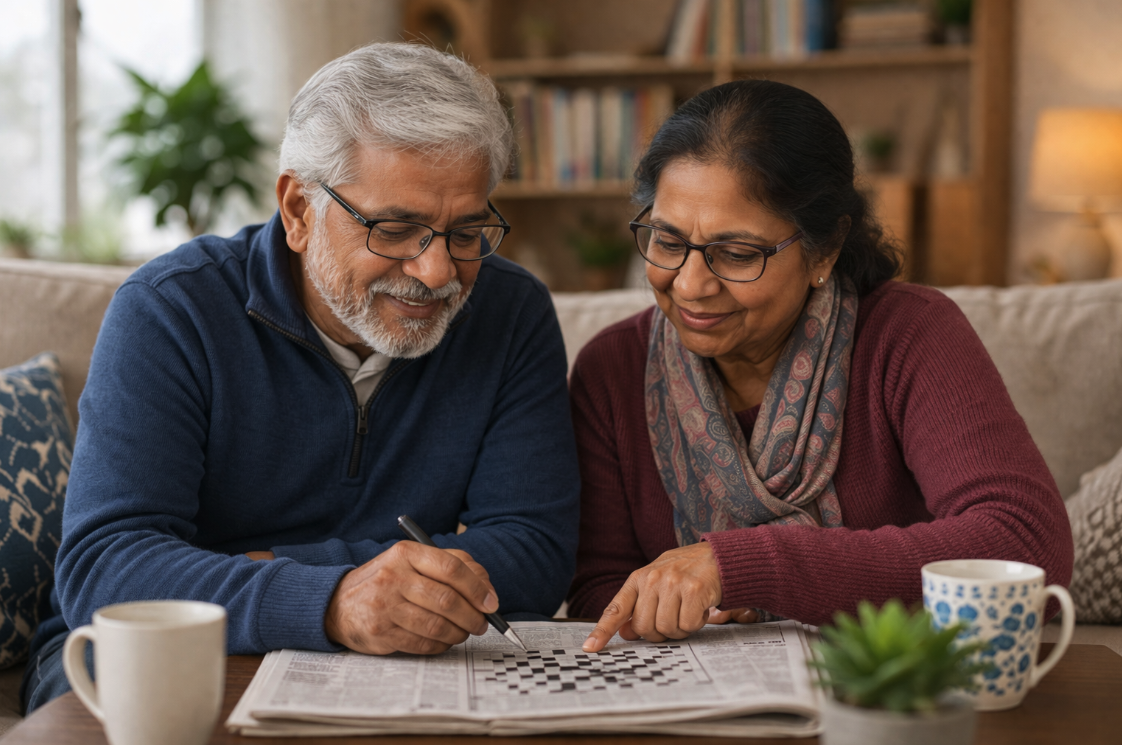
Older Indian UK couple sitting at a table, using a laptop and solving a crossword together to keep their minds active

Lifelong Learning

Keep Your Brain Strong for Life Did you know that one of the simplest ways to reduce your risk of dementia is something you can start today… and it doesn’t cost a thing? Keep your brain active. What Does “Keeping Your Brain Active” Mean? It’s not about doing something complicated or academic. It’s about staying […]

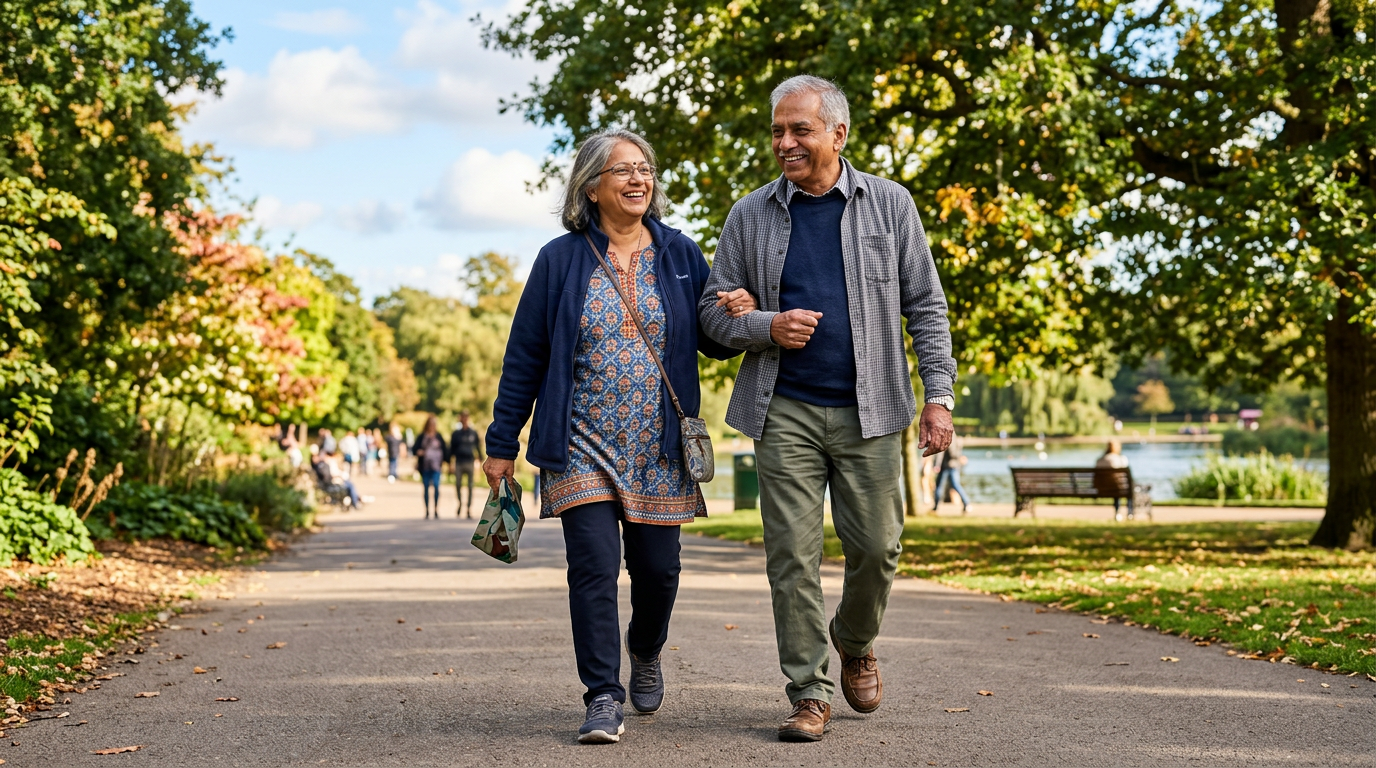
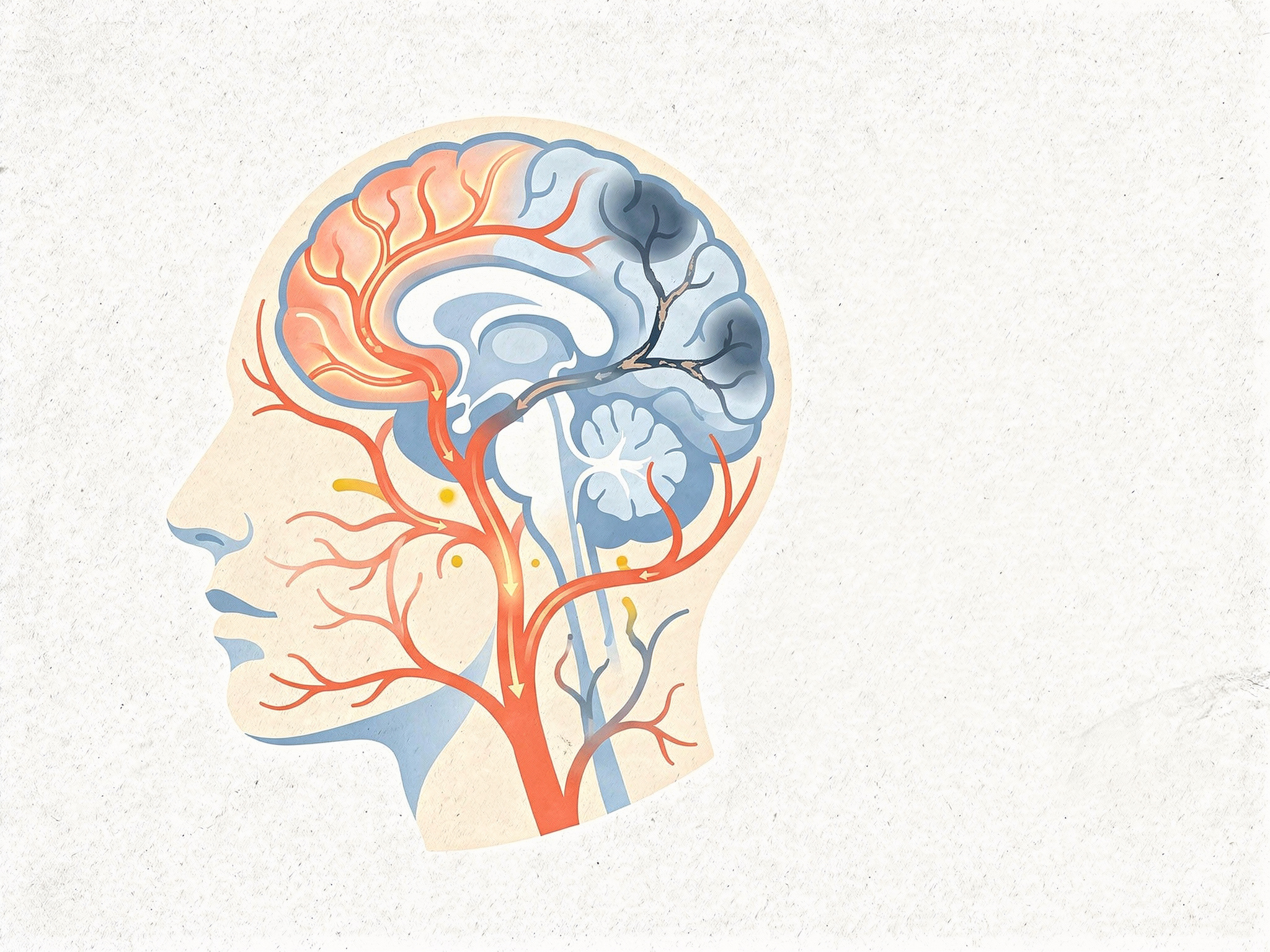
British Indian older couple walking outdoors with contrasting images of a damaged brain and a healthy brain.

How Quitting Smoking Can Help Protect Your Brain

Every year on 11 March, National No Smoking Day encourages people across the UK to take a fresh look at their relationship with tobacco. Most people already associate smoking with lung disease and heart problems. What is discussed far less is the impact it has on the brain. Research shows that smoking significantly increases the

New Year, New Me? Or Just a Little More Care.

Every January, the same phrase rolls around again: new year, new me. It’s meant to sound hopeful. Fresh start. Clean slate. But for a lot of people, it doesn’t feel inspiring — it feels heavy. 😮‍💨 It quietly suggests that who you are right now isn’t enough. That you need fixing. Upgrading. Replacing. No wonder

General Tips

General Tips for Communicating with Someone Living with Dementia General Tips for Communicating with Someone Living with Dementia Practical guidance to make conversations easier, more respectful, and more effective. General tips for communicating Choose a good place to talk: quiet, well-lit, and free from background noise (TV/radio off). Gain their full attention before you start.

Living with Dementia

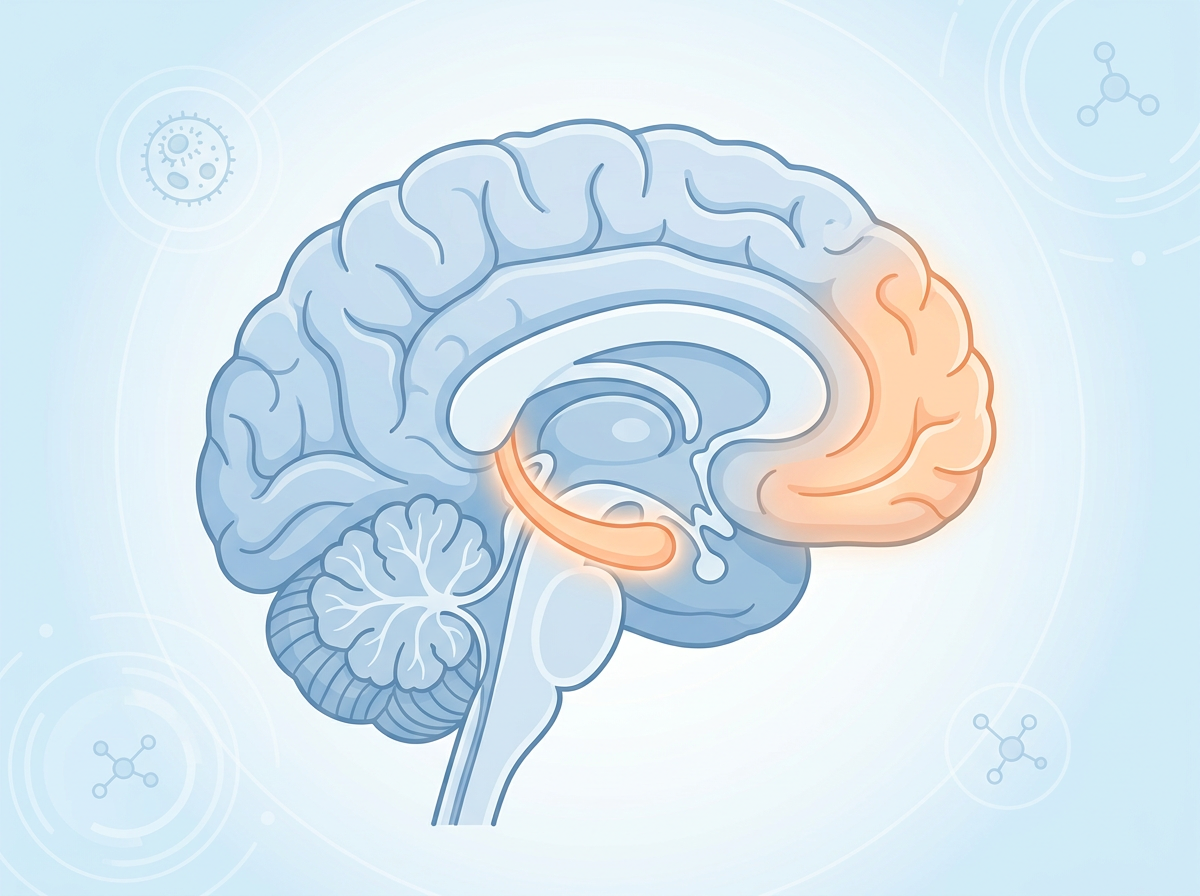
Living with Dementia Dementia is the broad term used to describe the signs and symptoms that are caused by a number of conditions that affect the brain. Many people can, and do, live well with dementia by recognising the impact that it can have on all areas of their life and taking steps to address

Reducing The Risk of Dementia

Getting older is the biggest risk factor for dementia — however, evidence shows that there are things you can do to help reduce your own risk. Keeping Active Doing regular physical activity is one of the best ways to reduce your risk of dementia. Physical activity is good for your heart, circulation, weight control and

Types of Dementia

Rarer types of dementia only account for about 5% of all dementia cases. They tend to be more common among younger people with dementia (under the age of 65). Corticobasal Syndrome (CBS) CBS is a rare condition in which parts of the brain become damaged and begin to shrink. Sometimes referred to as ‘corticobasal degeneration’

Symptoms of Dementia

There are many symptoms of dementia. Someone living with dementia may have one or more of the traits listed below. Cognitive Issues Difficulty recalling events that have happened recently Difficulty in making decisions, solving problems, or carrying out a sequence of tasks Difficulty following a conversation or finding the right word for something Problems judging

Scroll to Top