
Most of us think of high blood pressure as a “heart thing”. It’s the number your GP frowns at, the reason you’re told to go easy on the salt. But here’s something that surprises a lot of people: high blood pressure doesn’t just affect your heart — it can also raise your risk of dementia.
At AmbaCare, we want to help you understand the connection between blood pressure and brain health — and, more importantly, what you can do about it. The good news is that this is one of the most controllable risks out there.

The Link Between Blood Pressure and Dementia
High blood pressure is incredibly common. In fact, around one in three adults in the UK lives with it — that’s roughly 16 million people. Many don’t even know they have it, which is why it’s sometimes called the “silent” condition.
Long-term research has shown that people with high blood pressure in midlife — broadly your 40s, 50s and 60s — are more likely to develop dementia later in life, particularly vascular dementia. It’s not a certainty, and a high reading today doesn’t mean dementia tomorrow. But it is absolutely something worth taking seriously.
What High Blood Pressure Does to Your Brain
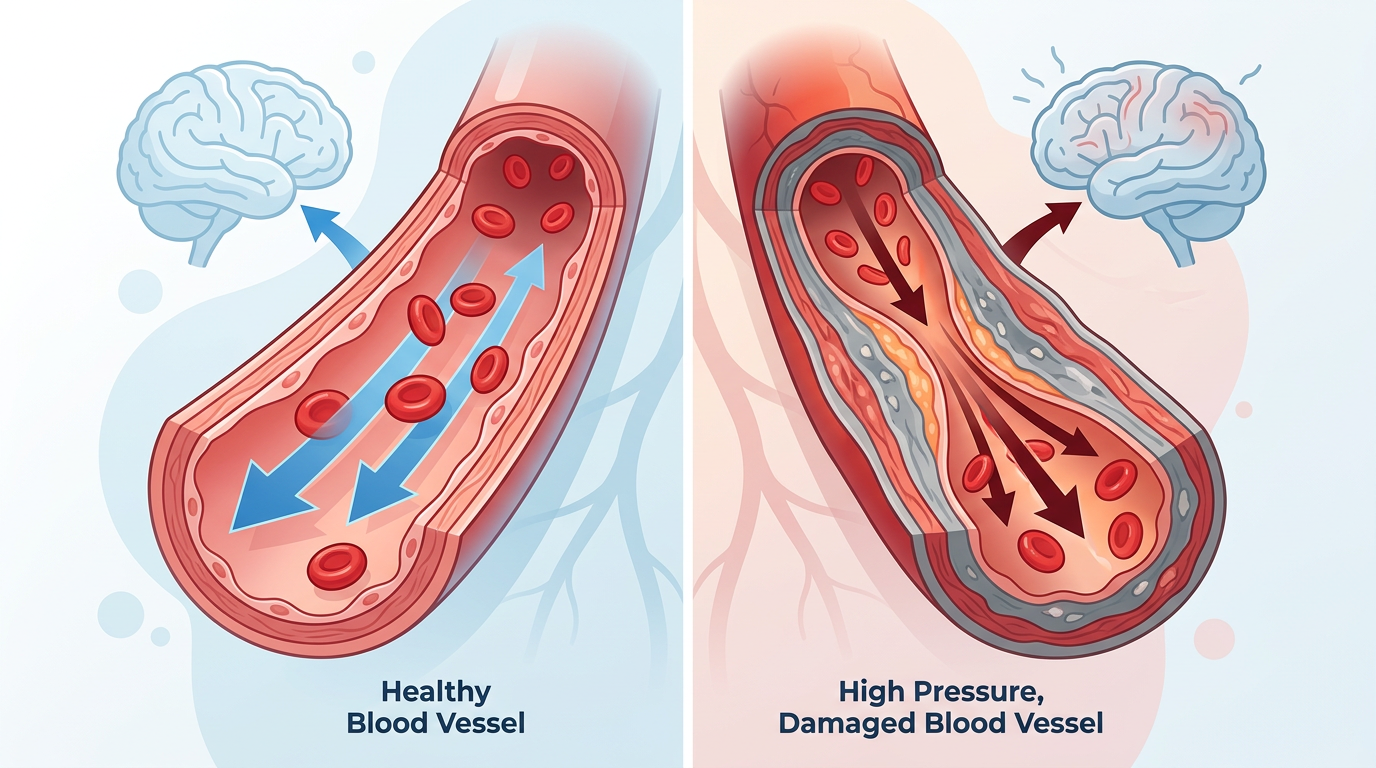
To understand why, it helps to picture what’s actually going on inside your body.
Your blood vessels are designed to carry blood at a steady, comfortable pressure. When that pressure stays too high for too long, it slowly damages the vessel walls — including the delicate little vessels that feed your brain.
Your brain is a bit of a diva, energy-wise. It’s only about 2% of your body weight, yet it demands a huge share of your blood, oxygen and nutrients to keep working properly. So when the vessels supplying it become narrowed or damaged, your brain simply doesn’t get everything it needs. Over time, that quiet shortfall can contribute to cognitive decline.
The “Silent” Problem
Here’s the tricky part: high blood pressure rarely makes a fuss. There’s usually no headache, no dizzy spell, no flashing warning light. You can feel completely fine while it quietly goes about its business in the background.
That’s exactly why the biggest danger isn’t high blood pressure itself — it’s uncontrolled high blood pressure that goes unnoticed and untreated for years. Think of it like a slow puncture: easy to miss, but far better caught early. Which leads us to the genuinely encouraging bit.

The Good News
This is the part we really want you to take away. Blood pressure is one of the most manageable risks to your brain health — and small, consistent changes can make a real difference. Research even suggests that if everyone kept their blood pressure in check, there’d be meaningfully fewer cases of dementia.
You don’t need to overhaul your whole life overnight. The following habits can all help protect both your heart and your brain:
- Eat a healthy, balanced diet — plenty of vegetables, fruit and wholegrains, with less processed food. Your plate is powerful.
- Move every day — even a brisk daily walk counts. Movement helps keep your blood pressure (and your mood) in a happier place.
- Go easy on the salt — it’s hiding in more foods than you’d think, so check those labels.
- Drink alcohol sensibly — keeping within the recommended limits eases the strain on your body and brain alike.
- Don’t smoke — it’s never too late to quit.
- Manage your stress — try relaxing exercises, spend time with family, friends or pets, and take a few deep breaths. These aren’t luxuries; they’re part of the plan.
- Take any prescribed medication — if your GP has prescribed something to control your blood pressure, taking it as directed is one of the kindest things you can do for your future brain.
And do get your blood pressure checked regularly — it’s quick, painless and free, and it’s the only reliable way to know your numbers.
Watch Our New Video
Could High Blood Pressure Affect Your Brain?
We have just released a brand new health awareness video exploring exactly this topic — the link between high blood pressure and the risk of dementia, and the simple steps you can take to protect your brain health today. The video follows real everyday stories — people just like you and your loved ones — and shows in a clear, honest and compassionate way how our daily choices can shape our brain health for years to come. We hope it makes you stop and think. We hope it makes you feel empowered. And we hope it inspires just one small change that your future brain will thank you for.
Your Brain and Your Heart Are Connected
The choices you make today — what you eat, how much you move, whether you keep an eye on your numbers — are quietly shaping your brain health for years to come.
That can feel like a lot of pressure (no pun intended). But it can also feel like an opportunity. Look after your heart and you’re looking after your brain at the same time.
At AmbaCare, we believe prevention is one of the most powerful tools we have in the fight against dementia. And it starts with understanding — exactly what you’ve just done by reading this.
Want to learn more about protecting your brain health? Get in touch with the AmbaCare team — we’re here to help.