
Could Alcohol Affect Your Brain? Here’s What You Need to Know
Most of us know that drinking too much isn’t great for the liver. But did you know that long-term alcohol use can also damage your brain — affecting your memory, your thinking, and your ability to make decisions?
At AmbaCare, we want to help you understand the connection between alcohol and brain health — and, more importantly, what you can do about it. Because the good news is that reducing your risk is very much within your control.

The Link Between Alcohol and Dementia
Alcohol-related brain damage is more common than many people realise — and it doesn’t only affect people in later life. The changes in the brain can begin as early as your 40s, quietly building up over years of heavy drinking before any obvious symptoms appear.
Research consistently shows that long-term excessive alcohol use is a significant risk factor for dementia. It can cause direct damage to brain cells, shrink key areas of the brain, and disrupt the delicate chemical balance your brain relies on to function well. It’s now recognised as one of the dementia risk factors we can genuinely do something about.
What Alcohol Does to Your Brain
To understand why, it helps to think about what’s actually happening inside your brain when you drink heavily over a long period of time.
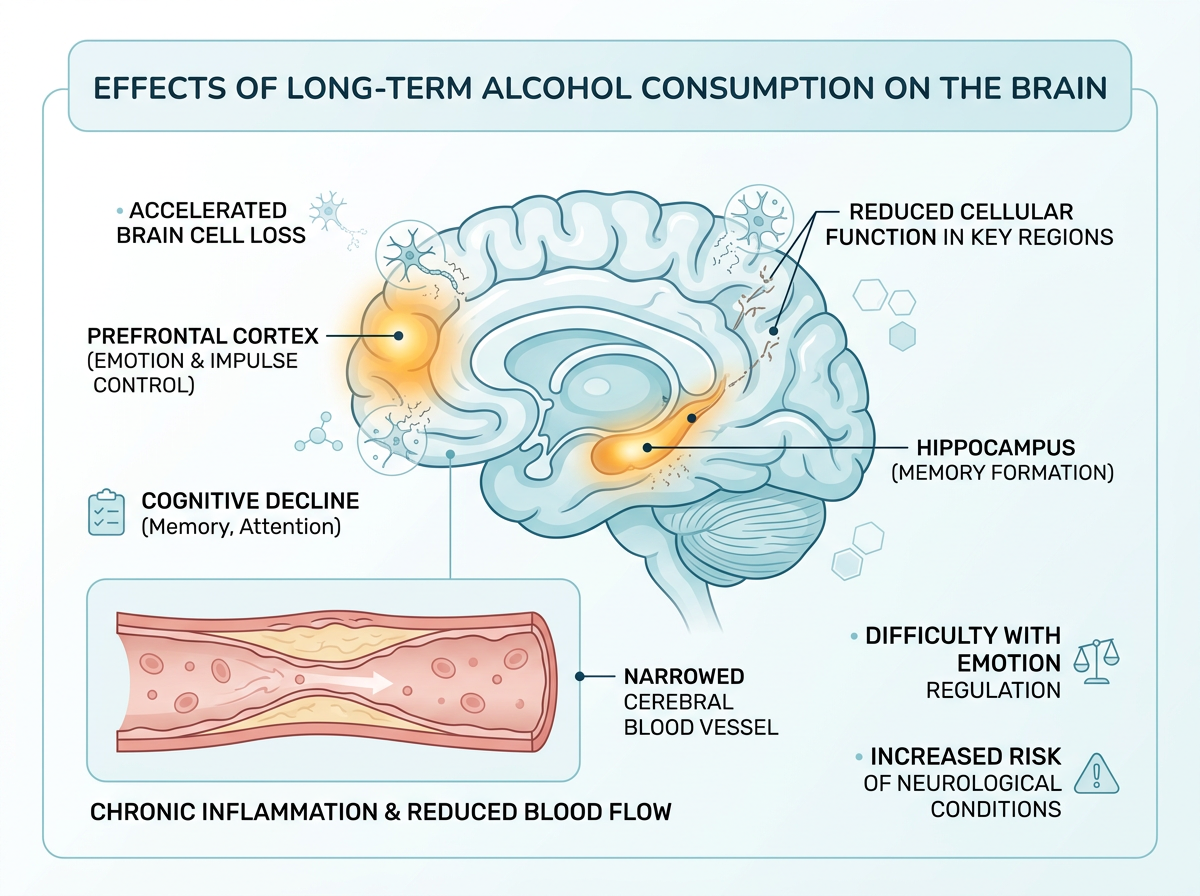
Alcohol is toxic to brain cells in large amounts. Over time, it can cause them to deteriorate and die — particularly in the areas of the brain responsible for memory, learning and emotional regulation. It also depletes thiamine (vitamin B1), a nutrient the brain depends on, which can lead to a specific and serious form of brain damage known as Wernicke-Korsakoff syndrome.
On top of this, heavy drinking raises your blood pressure, damages blood vessels, and disrupts sleep — all of which place extra strain on the brain and accelerate cognitive decline.
The Early Warning Signs Are Easy to Miss
Here’s what makes alcohol-related brain damage particularly tricky: the early signs can be subtle and easy to overlook or explain away. Mild memory lapses, difficulty concentrating, slower thinking, changes in mood — these can all be early indicators, but they’re also easy to put down to stress, poor sleep or simply getting older.
That’s why it’s so important not to wait for an obvious warning sign. The earlier you act, the more you can protect your brain. And the single most effective thing you can do is reduce how much you drink.
What You Can Do
This is the part we really want you to take away. Cutting back on alcohol is one of the most powerful steps you can take to protect your brain — and it’s never too late to start. Here are some practical ways to reduce your risk:
- Stick to the recommended limits — no more than 14 units of alcohol per week, spread over at least three days. That’s roughly six pints of average-strength beer or ten small glasses of wine.
- Have alcohol-free days — giving your brain and body regular breaks makes a real difference over time.
- Track what you’re drinking — it’s easy to underestimate. Keeping a simple note for a week can be eye-opening.
- Find alternatives for social moments — there are now some genuinely good alcohol-free options out there. You don’t have to feel like you’re missing out.
- Talk to your GP — if you’re worried about your drinking, your GP can offer support, guidance and referrals without judgement. You don’t have to figure it out alone.
- Eat well and stay active — a healthy diet and regular movement support brain health and can make it easier to cut back on alcohol too.

Watch Our New Video
We’ve just released a brand new health awareness video exploring exactly this topic — the link between long-term alcohol use and the risk of dementia, and the simple steps you can take to protect your brain health today. The video follows real, everyday stories — people just like you and your loved ones — and shows in a clear, honest and compassionate way how our daily choices can shape our brain health for years to come. We hope it makes you stop and think. We hope it makes you feel empowered. And we hope it inspires just one small change that your future brain will thank you for.
Your Choices Today Shape Your Brain Tomorrow
The choices you make today — how much you drink, how often, and whether you seek support when you need it — are quietly shaping your brain health for years to come.
That can feel like a lot to sit with. But it can also feel like an opportunity. You don’t need to be perfect. You just need to start.
At AmbaCare, we believe prevention is one of the most powerful tools we have in the fight against dementia. And it starts with understanding — exactly what you’ve just done by reading this.
Worried about your drinking or want to learn more about protecting your brain health? Get in touch with the AmbaCare team — we’re here to help.