Most of us have heard that high cholesterol isn’t great for the heart. But did you know it can also increase your risk of dementia? It turns out that looking after your cholesterol levels is one of the kindest things you can do for your brain — and the good news is it’s very much within your control.
At AmbaCare, we want to help you understand the connection between cholesterol and brain health — and, more importantly, the simple steps you can take today to make sure your brain stays as healthy as it can be.
The Link Between Cholesterol and Dementia
Cholesterol is a fatty substance your body actually needs — it helps build your cells and keep your nerves working properly. The trouble starts when there’s too much of the “bad” kind (LDL) floating around in your blood.
Research has shown that having high LDL cholesterol in midlife — your 40s, 50s and 60s — is linked to a greater risk of developing dementia later on. In fact, it’s now recognised as one of the biggest dementia risk factors we can actually do something about. One major review found that if everyone kept their cholesterol in check, there could be around seven fewer cases of dementia for every hundred people who would otherwise develop it. That’s a genuinely encouraging number.
What High Cholesterol Does to Your Brain
There are two main ways too much cholesterol can affect your brain — and it helps to picture both.
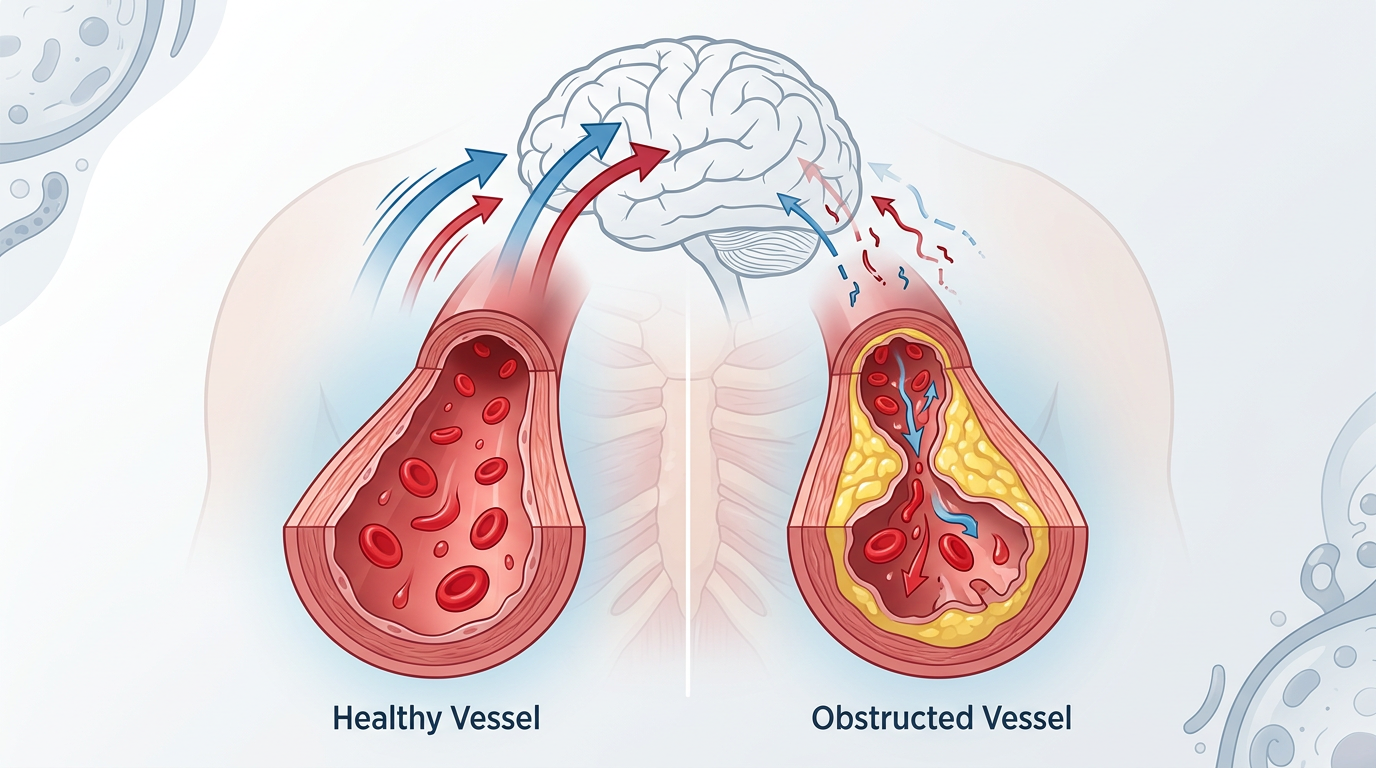
First, the plumbing. Excess cholesterol can build up inside your blood vessels, narrowing them and slowing the flow of blood and oxygen. Your brain is enormously hungry for both, so when its supply lines get clogged or blocked, brain cells suffer. It’s the same process that raises your risk of having a stroke — which is one of the main causes of vascular dementia.
Second, the build-up. High cholesterol can also encourage two proteins — amyloid and tau — to gather in the brain, forming the “plaques and tangles” closely associated with Alzheimer’s disease. Encouragingly, research suggests that lowering cholesterol may help reduce how much of this build-up occurs.

The “Silent” Problem
Here’s the catch: high cholesterol has no symptoms. None. You can feel perfectly well while your levels quietly creep up in the background. The only way to know your numbers is a simple blood test — quick and painless, and available at your GP surgery or even some pharmacies as part of the free NHS Health Check for anyone aged between 40 and 74 who doesn’t already have regular checks with their GP for a long-term condition such as diabetes.
If you’re in your 40s or beyond, it’s well worth getting checked. And if you’re told your cholesterol is high, don’t panic — there’s a lot you can do, from everyday lifestyle changes to medication if your GP recommends it.
How to Lower Your Cholesterol
This is the part we really want you to take away. Small, consistent changes add up — and the very same habits protect your heart and your brain at the same time. Here’s where to start:
- Eat a heart-healthy diet — plenty of fruit, vegetables and wholegrain foods, and choose healthy fats like olive or rapeseed oil, nuts and oily fish. Your plate is powerful.
- Cut back on saturated fat — that’s the stuff in biscuits, pastries, sausages and lots of red meat. Swapping a few of these for healthier options makes a real difference.
- Move every week — aim for around two and a half hours of moderate exercise, such as brisk walking, cycling or swimming. Spread it out however suits you best.
- Don’t smoke — giving up is one of the best things you can do for both your blood vessels and your brain.
- Go easy on the alcohol — keep it to no more than 14 units a week, with a few alcohol-free days in between.
Doing all of this helps keep your blood pressure and blood sugar steady too — which in turn helps keep your cholesterol in check. It’s all connected.
Watch Our New Video
Could High Cholesterol Affect Your Brain?
We have just released a brand new health awareness video exploring exactly this topic — the link between high cholesterol and the risk of dementia, and the simple steps you can take to protect your brain health today. The video follows real everyday stories — people just like you and your loved ones — and shows in a clear, honest and compassionate way how our daily choices can shape our brain health for years to come. We hope it makes you stop and think. We hope it makes you feel empowered. And we hope it inspires just one small change that your future brain will thank you for.
Your Brain and Your Heart Are Connected
The choices you make today — what’s on your plate, how much you move, whether you get your numbers checked — are quietly shaping your brain health for years to come.
That can feel like a lot to take on. But it can also feel like an opportunity. Look after your heart and you’re looking after your brain at the very same time — two birds, one stone, in this case one healthy habit. And remember: it’s never too late to start.
At AmbaCare, we believe prevention is one of the most powerful tools we have in the fight against dementia. And it starts with understanding — exactly what you’ve just done by reading this.
Want to learn more about protecting your brain health? Get in touch with the AmbaCare team — we’re here to help.