
Every year on 11 March, National No Smoking Day encourages people across the UK to take a fresh look at their relationship with tobacco.
Most people already associate smoking with lung disease and heart problems. What is discussed far less is the impact it has on the brain.
Research shows that smoking significantly increases the risk of cognitive decline and dementia. The good news is that quitting, at any age, reduces that risk significantly.
Let’s unpack why.
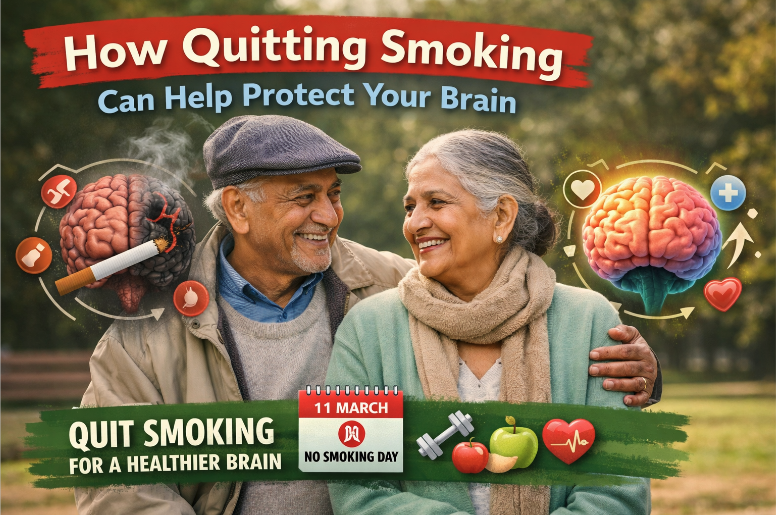
Smoking and Dementia: What’s the Connection?
Dementia is not a single illness or disease. It is a general term used to describe a collection of symptoms that happen when the brain is damaged by disease or injury, leading to problems with memory, thinking, solving problems and daily functioning.
While age is a major risk factor, lifestyle also plays a major role, and smoking is one of the most damaging factors.
Smoking affects the brain in several ways:
- It narrows blood vessels, reducing oxygen delivery to the brain
- It increases inflammation and leads to cells being damaged by harmful toxins
- It raises the risk of strokes and silent brain damage
- It speeds up the process of brain ageing
All of these processes contribute directly to vascular dementia and also increase the likelihood of Alzheimer’s disease.
According to NHS guidance, smokers are more likely to develop dementia than non-smokers. Heavy smoking during midlife is especially harmful.
This damage builds quietly over years.

The Encouraging Part: Your Brain Can Recover
Many people assume that once harm is done, it cannot be reversed. That is not entirely true.
After quitting smoking:
- Blood circulation improves within weeks
- Oxygen levels return to normal
- Inflammation begins to decrease
- Stroke risk falls over time
Long-term studies show that former smokers can significantly reduce their dementia risk, particularly when they quit before later life.
Stopping now is not too late. Every smoke-free day supports brain health.

11 March: A Moment to Reset
The NHS drives the campaign to encourage smokers to use the day to try and quit smoking on the annual No Smoking Day on 11 March.
It exists to give people a practical starting point.
You do not need to quit forever today. You just need to begin.
That might mean cutting down, trying nicotine replacement, or speaking with your GP or pharmacist. The important thing is taking the first step.
Smoking Is a Modifiable Dementia Risk Factor
Many dementia risks feel outside our control.
Smoking is not.
Alongside regular movement, good sleep, social connection, and a healthy diet, quitting smoking is one of the most powerful actions you can take to protect long-term brain health.
If staying independent, mentally sharp, and present later in life matters to you, this choice matters.

How AMBA Care Supports Brain-Healthy Living
At AMBA Care, we focus on preventative wellbeing. We help people maintain cognitive health through informed lifestyle choices, early support, and personalised care pathways.
National No Smoking Day is a reminder that small decisions today shape how we live tomorrow.
If you or someone you care for is thinking about quitting, contact your local NHS stop smoking service or speak with your GP for tailored support.
Your future brain will thank you.