Did you know that one of the simplest ways to reduce your risk of dementia is something you can start today… and it doesn’t cost a thing?
Keep your brain active.

What Does “Keeping Your Brain Active” Mean?
It’s not about doing something complicated or academic. It’s about staying curious and engaged with life.
That can be:
- Learning a new language
- Trying a new recipe
- Playing a strategic game like chess
- Having conversations that challenge your thinking
If it makes you think, adapt, or learn, it counts.

Why It Actually Matters
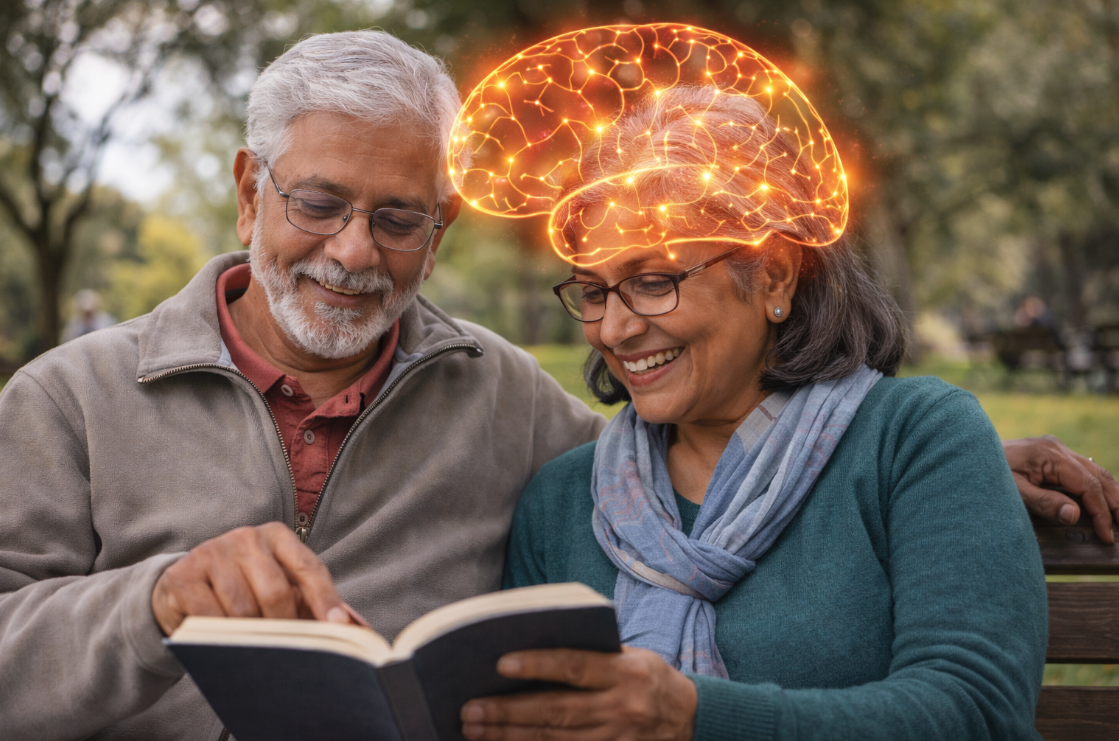
When you keep your brain active, you’re not just passing time. You’re building brain resilience.
This means your brain becomes better at handling challenges as you get older.
The more you use your brain, the more connections it builds.
- These connections act like backup pathways
- If one pathway weakens over time, your brain can reroute and keep functioning
That’s the difference between decline and staying sharp.
The Hidden Advantage: “Backup Systems”
Your brain is constantly adapting.
Every time you learn something new, solve a problem, or try something unfamiliar, you strengthen a network of connections.
Over time, this creates a kind of built-in safety net.
So even if parts of the brain slow down with age, others can step in and help.

Where Most People Get It Wrong
People assume they’ll deal with this later in life.
That’s back-to-front thinking.
- If you start early, you build more resilience
- If you start later, you’re playing catch-up
But starting later is still far better than not starting at all.
You don’t need a big plan. You just need to be consistent.
- Spend 15–20 minutes learning something new each day
- Swap passive habits (like scrolling) for active ones
- Talk to people who challenge your ideas
- Do things that feel slightly uncomfortable mentally
If it feels easy and automatic, it’s probably not helping much.
The Long-Term Payoff
- Support your brain health
- Build resilience against decline
- Improve how well your brain copes with ageing
- Lower your risk of dementia over time
Final Thought
It’s never too early.
It’s never too late.
Stay curious, keep learning, and look after your brain for life.